Sectional vs. Roll-Up Doors: Which One Belongs on Your Building Type?
You are standing in front of a commercial bay or a residential garage opening, trying to figure out which door type actually makes sense for your building. Maybe you are replacing a failed door, finishing a new construction, or upgrading a property. The two options your contractor keeps mentioning are sectional and roll-up, and nobody has given you a straight answer about which one belongs where.
These are not interchangeable choices. The right door depends on ceiling space, building use, insulation needs, and how Central Florida's heat and humidity will interact with the materials over time. Understanding the mechanical difference between the two will make the rest of this decision obvious.
How Each Door Actually Works
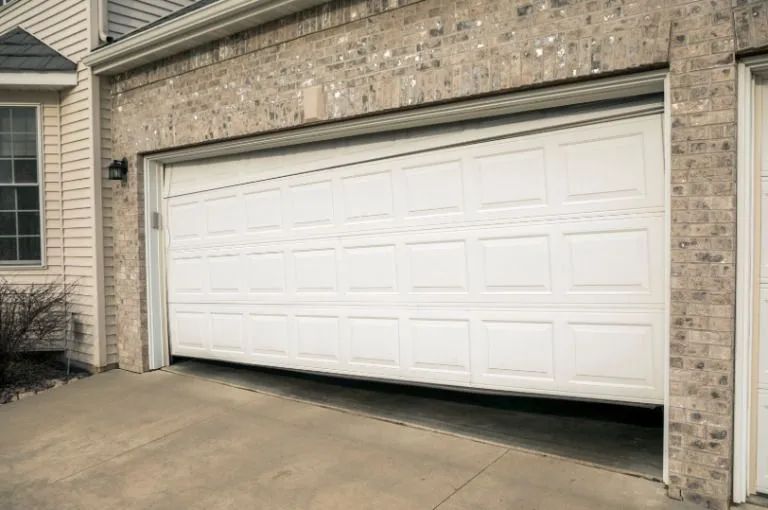
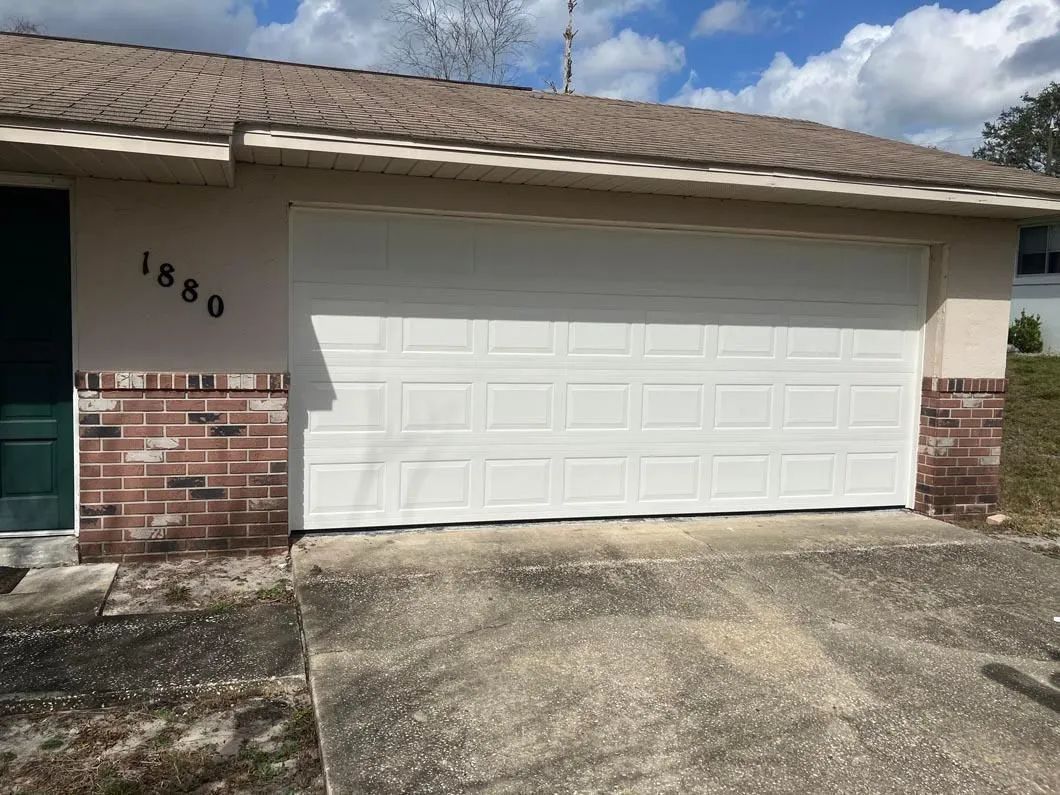
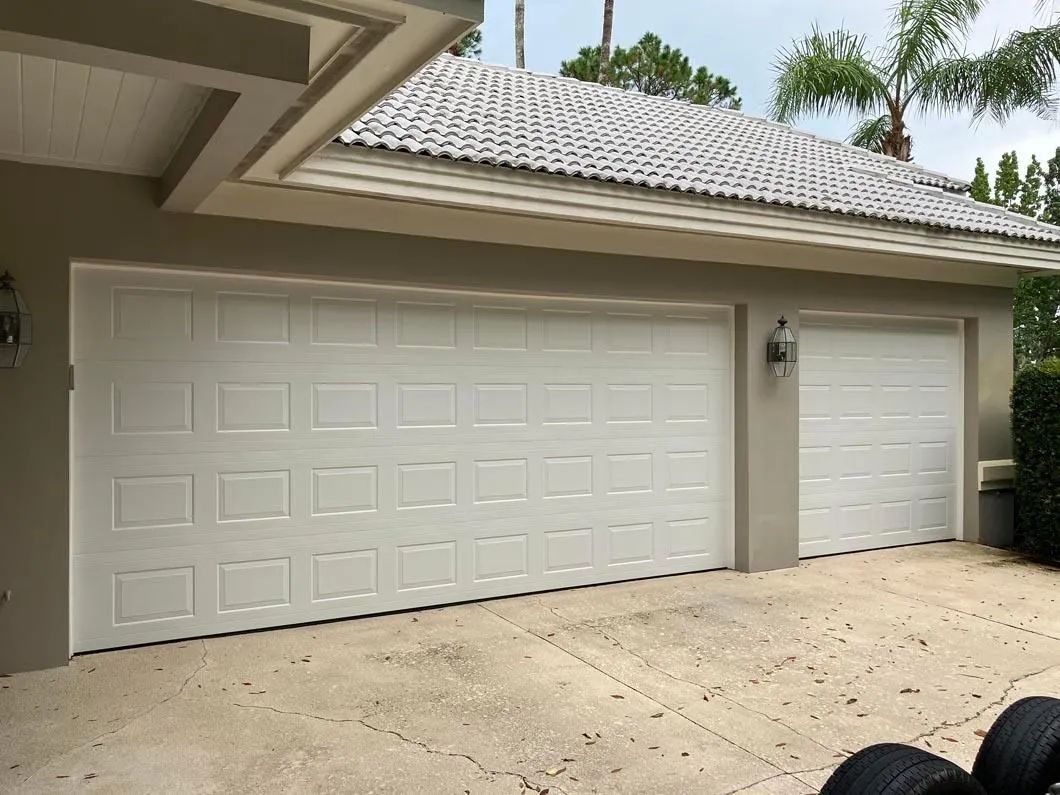
Sectional doors operate on a track-and-spring system. The door is made of four to six horizontal panels connected by hinges. When you open the door, those panels follow a curved track upward and ride horizontally along the ceiling joists. The panels fold at the hinges as they transition from vertical to horizontal. Most residential garages in the Orlando and Apopka area use sectional doors because they work well with standard 8 to 10-foot ceiling heights and do not require a large roll drum overhead.
Roll-up doors, sometimes called coiling doors, work differently. Instead of panels riding a track, a continuous curtain of interlocking slats coils around a drum mounted above the opening. When you open the door, the slats wrap tightly around that drum. Because the door stores itself as a coil rather than riding along the ceiling, roll-up doors need almost no headroom beyond the opening itself. That is the defining mechanical advantage.
TIP: Measure your available headroom before calling anyone. For a sectional door, you typically need 10 to 12 inches of clearance above the opening for the tracks and spring hardware. For a roll-up, you need roughly 6 to 9 inches for the drum. If your building has low ceilings or overhead obstructions, that measurement alone may decide your door type.
Which Buildings Use Which Door
Sectional doors are the standard choice for residential garages and light commercial settings. They provide excellent insulation options with polyurethane-filled panels rated from R-6 to R-18, they integrate cleanly with automatic openers, and they are widely available in steel, aluminum, wood composite, and fiberglass. The panel construction also gives you a broad range of aesthetic options, which matters for homes and storefronts.
Roll-up doors are built for high-use commercial and industrial environments. Warehouses, loading docks, storage facilities, fire stations, and automotive service bays use roll-up doors because they are engineered for cycle counts that far exceed what a sectional door can handle. A standard residential sectional door is rated for around 10,000 to 15,000 cycles over its lifespan. A commercial-grade coiling door can handle 100,000 cycles or more. If your bay opens and closes dozens of times per day, that difference is not trivial.
WARNING: Do not attempt to install a residential sectional door on a high-cycle commercial opening to save on upfront investment. The spring system and track hardware are not designed for heavy daily use. Springs rated for 10,000 cycles will fail far ahead of schedule under commercial load, and a failed torsion spring under tension is a serious physical hazard.
Headroom, Sideroom, and Backroom: What Your Building Actually Has
Every door type has minimum spatial requirements, and your building may dictate the decision before aesthetics enter the conversation.
Headroom
is the vertical space between the top of the opening and the ceiling. Sectional doors with standard lift require 10 to 12 inches. Roll-up doors need as little as 6 inches, which is why they appear in buildings with concrete ceilings and no room for a track system.
Sideroom
is the clearance on either side of the opening. Most sectional installations need 3.75 inches on each side. Roll-up doors mount within the frame, so sideroom requirements are minimal.
Backroom
is the ceiling depth the open door will occupy. A standard sectional needs backroom equal to the door height plus about 18 inches. A roll-up uses only the drum space overhead.
In Apopka and across the Orlando metro, we regularly encounter structures where ceiling heights were never planned with a track-based door in mind. Measuring all three dimensions before ordering prevents field modifications that add time and expense.
Insulation and the Central Florida Climate Factor
Central Florida averages over 230 days per year where temperatures exceed 85 degrees Fahrenheit. If the space behind the door is conditioned or if it connects to a conditioned space, insulation value matters more here than it does in most of the country.
Sectional doors offer genuinely strong insulation performance. Steel doors with polyurethane injection reach R-18, and those with polystyrene fill range from R-6 to R-10. The insulation is built into the panel construction and creates a thermal break across the full door surface.
Roll-up doors in the standard slat configuration provide almost no insulation. The interlocking steel curtain has no fill material, and the gaps between slats allow air transfer. Insulated roll-up curtains exist and are rated to around R-3 to R-4, but that is still well below what a well-built sectional can deliver. For a storage-only bay that is never conditioned, this is not a problem. For a workshop, living space above the garage, or any air-conditioned commercial area, the insulation gap between these two door types translates directly into higher energy bills across the Florida summer.
Maintenance Expectations Over Time
Sectional doors have more moving components: springs, hinges, rollers, cables, and tracks. Torsion springs on residential sectional doors are rated for roughly 10,000 cycles, translating to about 7 to 10 years of average residential use. Rollers wear on a similar schedule, and panels can dent or suffer weather seal failure over time.
Roll-up doors have fewer moving parts. The curtain, drum, and side guides make up most of the system, and commercial-grade coiling hardware handles decades of use with less frequent service. The tradeoff is that curtain repairs are not a DIY job the way replacing a single sectional panel or a worn roller can be.
In the Orlando area, both door types deal with the same stressors: humidity that accelerates rust on uncoated hardware and UV exposure that degrades weather seals faster than in northern climates. Plan on inspecting seals annually and replacing them every 3 to 5 years regardless of door type.
Choosing the Right Door Is a Building Decision, Not Just a Product Decision
Your door type should match your ceiling space, your usage pattern, your insulation needs, and the way Florida's heat and humidity will interact with the materials over a 15 to 20-year service life. Getting that match right at the start prevents early failures, higher energy costs, and repairs that compound because the wrong product was installed in the first place.
At Hicks Garage Doors, LLC, we have been handling commercial and residential door installations across Apopka & Orlando, Florida, and the surrounding communities for over 20
years. We work with both sectional and
roll-up systems
and will tell you honestly which one your building actually calls for.
Frequently Asked Questions
Can I put a roll-up door on a residential garage?
Yes, but with tradeoffs. Residential coiling doors exist at standard widths and work well when headroom is limited, but they deliver far less insulation than sectional panels. For most homes in the Apopka and Orlando area, sectional doors offer better thermal performance and more finish options.
How long does a commercial roll-up door last compared to a sectional?
A commercial coiling door rated for 100,000 cycles will significantly outlast a residential sectional in a high-use setting. Residential sectional doors rated for 10,000 cycles can fail inside two years in a bay running 30 to 50 cycles per day. Always match cycle rating to actual usage.
What happens if a roll-up door curtain gets damaged?
Curtain repair requires professional service. Unlike swapping a sectional panel, curtain work involves releasing tension from the drum system, which stores serious mechanical energy. Attempting to remove or replace a damaged slat without proper spring tools creates a real risk of sudden, forceful spring release and injury.
Does door type affect my garage's resale value in Florida?
For residential properties in Central Florida, insulated sectional doors are recognized as an energy-efficiency upgrade and add measurable appraisal value. For commercial buildings, matching the door type to intended use matters more. A light industrial space with sectional doors where coiling hardware is standard may invite questions during a sale.
How do I know if my current door type is wrong for my building?
Watch for repeated spring failures within a few years, chronic opener strain, or a poor floor seal the frame was never built to accommodate. Two or more of these signs on a door under eight years old suggest a product mismatch, not just normal wear.