Garage Door Replacement Signs Florida Homeowners Shouldn't Ignore
QUICK ANSWER: A garage door is ready for replacement when the door itself has failed, not just a part on it. The clearest signs are cracked or delaminated panels, rust bleeding through the bottom section, a door that sags out of square, repeated repairs on different components within the same year, and sections that no longer seal against the floor. Springs, rollers, cables, and openers are replaceable parts on an otherwise sound door. Panels, structural sections, and a warped frame are not. In Central Florida, humidity, daily sun exposure, and storm loading tend to push doors toward replacement sooner than in drier climates.
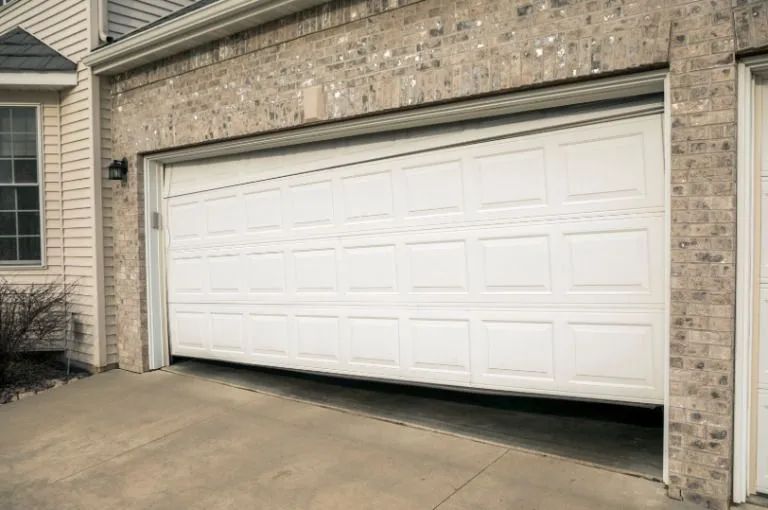
The tell usually shows up on a humid morning. A homeowner in Apopka hits the wall button, the door lifts halfway, shudders, and one panel flexes visibly out of line with the rest before the door finishes its travel. Nothing broke. Nothing is grinding. The door still works. But the panel that flexed has been quietly separating for months, and no adjustment on the opener is going to put it back together.
Knowing the difference between a door with a bad part and a door that has reached the end of its service life saves a lot of frustration. One is a service call. The other is a replacement.
What Actually Wears Out on a Garage Door
A residential garage door is a system of parts that fail on very different schedules, which is why "my garage door is broken" can mean six different things.
Springs and cables
Torsion springs carry nearly all the weight of the door and are commonly rated by manufacturers for roughly 10,000 open-and-close cycles. A household that runs the door four times a day works through that rating in well under a decade. Springs are consumable. Their failure says nothing about the condition of the door itself.
Rollers, hinges, and track
These wear from friction and misalignment. Nylon rollers go quiet-to-noisy over a few years, hinges elongate at the pin holes, and track can be bent by a bumper or a lawn mower handle. All of it is replaceable hardware.
The opener
A separate machine bolted to the ceiling with its own lifespan, its own safety sensors, and its own logic board. An opener can die on a nearly new door, or run fine behind a door that is falling apart.
The door sections
This is the part that determines replacement. Steel skins can rust from the inside out where moisture collects at the bottom rail. Wood and composite faces can swell, delaminate, and lose their grip on hardware. Insulated sections can separate from their core. Once a section is compromised, hardware that bolts into it stops holding, and the door starts fighting its own frame every cycle.
Signs the Door Itself Has Reached the End
Panels that flex, crack, or delaminate
Watch the door mid-travel from inside the garage. Any section that bows, twists, or shows a seam opening between the outer skin and the core is structurally spent. Sections are matched to a specific door model, and on older doors a matching replacement section is often no longer produced.
Rust breaking through the bottom section
Bottom rails sit in every puddle that runs under the door. Once rust perforates the steel, the bottom seal loses its mounting surface, water tracks farther in, and the corrosion moves upward through the section.
A door that no longer sits square
Close the door and look at the gap along the floor and both jambs. A wedge of daylight on one side means the door is racking, usually because hinge holes have elongated or a section has lost rigidity. Racking accelerates wear on rollers, cables, and track.
Repairs stacking up across different parts
One spring in March, a cable drum in June, two hinges in September. Separate parts failing in sequence on an older door usually means the whole assembly has aged past its working tolerances rather than that each part was unlucky.
Sections that will not seal
Gaps at the floor and jambs let in rain, heat, insects, and lizards. Weather seal replaces easily. A door that will not close flat against a level floor because the sections themselves are out of plane is a different problem.
Hardware that will not stay tight
Screws and lag bolts that keep backing out of the same section mean the material they thread into has failed. Retorquing them is a temporary fix at best.
TIP: Do a two-minute balance check twice a year. Pull the red release cord with the door closed, lift the door manually to about waist height, and let go. A balanced door holds position. A door that drops or shoots upward is putting that imbalance straight into the opener, which shortens the life of everything it drives.
How Central Florida Weather Shortens a Door's Life
Doors in Orange and Seminole County live a harder life than the same model in a dry climate.
Humidity works from the inside
A closed, uncooled garage holds warm, damp air against the interior face of the door for most of the year. On non-insulated steel doors, condensation forms on that face and collects along the bottom rail, which is exactly where rust starts.
Daily sun cycles the material
West-facing and south-facing doors take direct afternoon sun year round. Repeated heating and cooling loosens adhesive bonds in insulated sections and fades and chalks factory finishes faster than most homeowners expect.
Storm season loads the largest opening in the house
The garage door is the biggest single surface on most home exteriors. Wind pressure pushes it inward at the center of the span, and even without visible damage, that flexing gradually racks the sections and enlarges hinge holes. A door that has ridden out several storm seasons often shows the effect as a slow loss of rigidity rather than a dramatic failure.
Afternoon rain finds every gap
Water blown under a worn bottom seal sits on the slab against the bottom rail for hours. That standing contact does far more damage than the rain itself.
Choosing a Replacement That Suits the Climate
Material
Steel and aluminum handle Florida humidity better than solid wood, and modern composite overlays give a wood look without absorbing moisture. Galvanized steel with a baked-on finish resists the corrosion pattern that kills bottom sections.
Insulation
An insulated door with a polyurethane core does two useful things in an attached garage: it slows heat transfer into the wall shared with living space, and it stiffens the section itself, which resists flexing under wind pressure.
Reinforcement
Storm-rated doors use heavier gauge steel, additional horizontal struts, and stronger track and hardware. If the existing door is being replaced anyway, moving to a reinforced model is the moment to do it, since the bracing has to be matched to the door and the opening.
Hardware and seals
Galvanized track, sealed bearings, and a fresh bottom seal on a clean, level slab do more for long-term performance than most homeowners assume. Good hardware on an average door outlasts cheap hardware on a premium one.
Opener compatibility
A heavier insulated door asks more of the opener. A unit that has been running a light, uninsulated door for a decade may not have the lifting capacity or the remaining life to drive the replacement well.
WARNING: Never attempt to unwind, adjust, or remove torsion springs without the correct winding bars and training. A wound spring stores enough energy to cause severe injury, and it releases in a fraction of a second. Spring work, cable work, and section removal on a loaded door all belong with a technician.
What Replacement Day Looks Like
Most residential replacements are completed in a single day. The sequence rarely changes: the opening gets measured for width, height, headroom, and side room; the springs are unwound and the old door and track are dismantled from the top section down; the opening is checked for level and square, since a slab or jamb that is out of true will fight the new door; the new sections are stacked and hinged in place; the track, springs, and cables are set for the exact weight of the new door; and the opener force and travel limits are recalibrated with a reversal test at the floor.
The steps that separate a good install from a rough one are the unglamorous ones. Spring sizing matched to actual door weight. Track set plumb rather than close enough. A bottom seal fitted to the real profile of the slab.
Frequently Asked Questions
How long does a residential garage door usually last in Florida?
Service life depends more on exposure and use than on age. A sheltered insulated steel door lasts a long time, while an uninsulated door taking afternoon sun and blowing rain shows rust and fatigue sooner.
Can I replace a single damaged panel instead of the whole door?
Sometimes, depending on the door's age. Section replacement works when the manufacturer still produces a matching profile, color, and insulation type. On older doors those sections are often discontinued, and a mismatch throws off spring balance.
Do I need a new opener when I replace the door?
Not automatically. An opener in good condition with working safety sensors can drive a new door if it has the capacity. Older chain units paired with a heavier insulated door wear out noticeably faster.
Will an insulated door actually make my garage cooler?
It reduces heat transfer through the door, which helps most in attached garages. Insulation alone will not condition the space, since heat also moves through the ceiling, walls, and slab. Adjoining rooms notice it most.
How much noise reduction should I expect from a new door?
Much of the noise comes from hardware rather than the door: worn steel rollers, dry hinges, and loose track. New nylon rollers, tight hardware, rigid sections, and a belt drive opener quiet things considerably.
Is it a problem that my door only makes noise sometimes?
Intermittent noise points to a specific part rather than the door, and it deserves early attention. A roller binding near the track curve or a hinge clicking under load will worsen and damage neighboring parts.
Small Habits That Keep a Door Working Longer
The doors that last are rarely the most expensive ones. They are the ones set square at install, balanced to their actual weight, and looked over once or twice a year while problems are still small. A quick check of the bottom seal, the hinge screws, and the manual balance catches most of what later turns into a replacement conversation. Florida weather sets a hard schedule for anything mounted on the outside of a house.
Knowing which failures are worth repairing and which point toward a new door is the part most homeowners find hard to judge from the driveway. Hicks Garage Doors, LLC
has spent 20+ years on residential and commercial doors around Apopka and Orlando, and that experience mostly shows up as a straight answer about what is serviceable and what is finished. It keeps a homeowner from replacing a door that only needed a spring.